Guests build their own profile
An order is matched to a guest by phone, and their order count, total spent, average order and first and last visit update from it. Nobody keys a customer card.

Restaurant CRM and loyalty for Egypt
Every order builds the guest's record — how often, how much, how recently. Loyalty runs on points or stamps, and guests sort themselves into new, regular, loyal and VIP as they earn it.
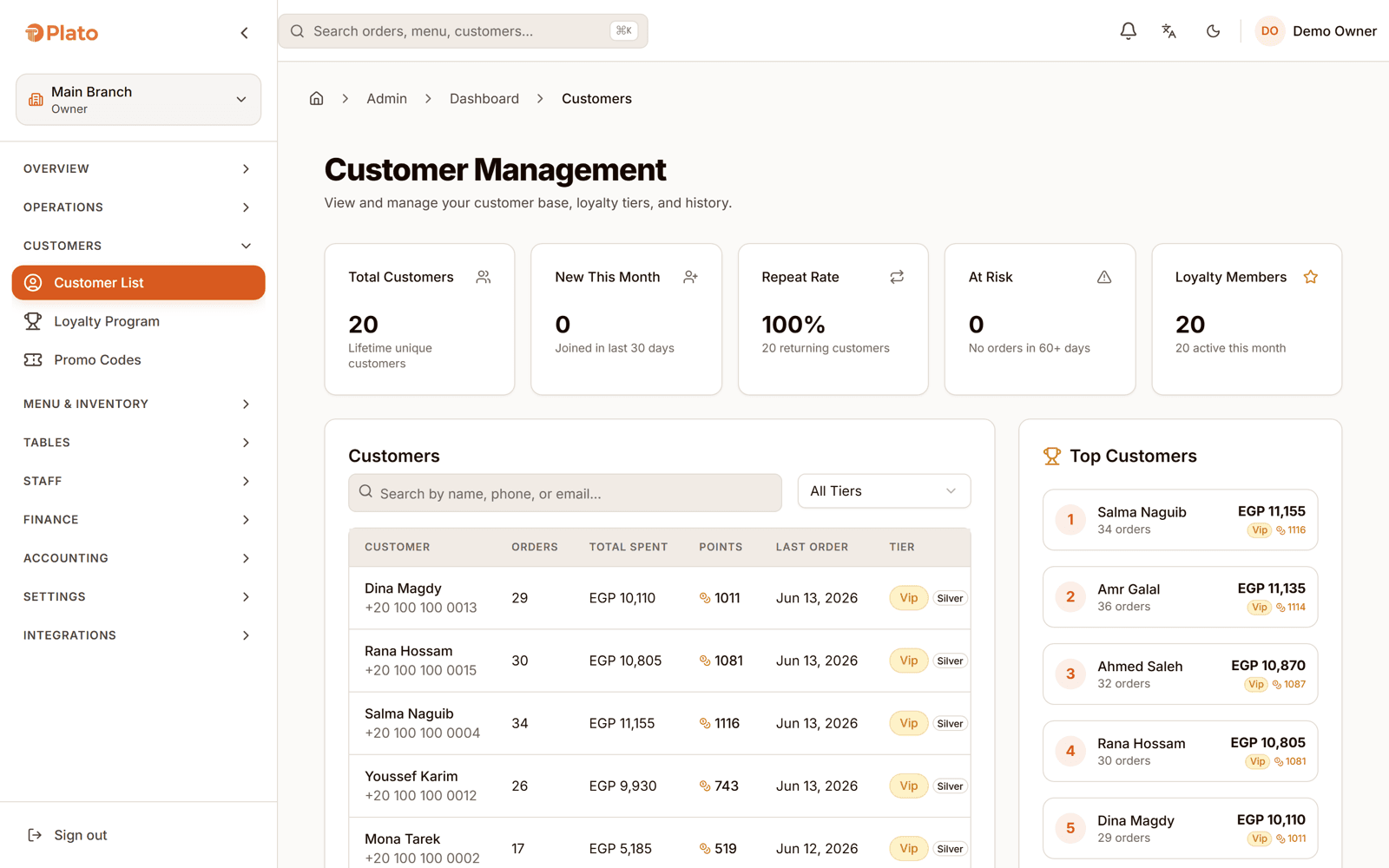
What the guest record is
Plato attaches an order to a guest by phone number, then keeps their counts current: how many orders, how much spent, the average, when they first came and when they last did. Loyalty points and tier sit on the same record, so the guest history and the reward balance never disagree.
From order to relationship
Most restaurants have thousands of orders and no idea which guests are worth keeping. The difference is whether the orders were ever attached to a person.
An order is matched to a guest by phone, and their order count, total spent, average order and first and last visit update from it. Nobody keys a customer card.
Run a points programme or a stamp card, earning per order, per item or above a minimum spend. Points are earned, redeemed, adjusted, bonused and expired on the record.
Guests sit in new, regular, loyal or VIP based on what they actually do, so the people worth a free dessert are the ones the data already identified.
A reward can be a free item, free delivery, a fixed discount, a percentage or cashback — defined once and redeemed against the balance the guest earned.
Every figure is counted from real orders, not typed into a card.
The record behind the reward
The guest record holds order count, total and average spend, first and last order, loyalty points and tier, birthday, marketing consent, tags and notes — all of it accumulated from service rather than entered by hand.
Against the loyalty app nobody opens
A loyalty scheme fails when it lives apart from the till. If earning requires the guest to remember something, most of them will not.
| Capability | Standalone loyalty app | Plato |
|---|---|---|
| Enrolment | Guest downloads something | Phone number at the till |
| Earning | Manual, if anyone remembers | Attached to the order that earned it |
| Guest history | Points balance only | Orders, spend, frequency and recency |
| Segments | One list of members | New, regular, loyal and VIP |
| Rewards | Fixed scheme | Free item, delivery, fixed, percentage or cashback |
| Consent | Assumed | Marketing opt-in stored per guest |
Fitted to how guests actually return
A stamp card that the till fills in, so the tenth coffee is free without anyone carrying a paper card around Cairo.
Guests arrive by phone number anyway. Points accrue on every delivery order and the tier follows the spend.
Fewer visits, larger cheques. Average order value and recency matter more than volume, and both sit on the record.
Turning it on
You do not need a campaign to start. You need orders attached to people, which the till can do from the first shift.
Attach the guest to the order at the till. That single habit is what builds every number that follows.
Choose the programme that fits your ticket size, and set how earning works — per order, per item or above a minimum.
Decide what the balance buys: a free item, free delivery, a discount or cashback.
Once the history exists, look at who is loyal, who is VIP and who has not been back.
CRM and loyalty questions
By phone number at the point of sale. The order is attached to that guest, and their order count, spend, average and visit dates update from it — there is no separate sign-up step for the guest to forget.
Both. A programme runs on points or on stamps, and earning can be set per order, per item, or only above a minimum spend.
A free item, free delivery, a fixed discount, a percentage discount or cashback. You define the rewards and they are redeemed against the balance the guest has earned.
Guests fall into new, regular, loyal and VIP based on their own history, so the segment reflects behaviour rather than a manual list someone maintains.
Yes. Marketing opt-in is stored on the guest record alongside the rest of their history, so you can tell who agreed to hear from you.
Yes. Guests carry tags and free notes, so allergies, seating preference or the fact that someone always asks for the corner table stay with the record.
See it on your own guests
Book a walkthrough with your ticket sizes, your repeat rate and the reward you actually want to give away.
Send us a few details. We'll set up a live walkthrough on your real menu, in your language, within one business day.