The order belongs to the table
Items are added to an order opened against a table, so a party's food stays together through service, splitting and the final cheque.

Waiter app for Egyptian restaurants
Orders open against a table and go straight to the kitchen from the floor. Waiters sign in with a PIN on a shared device, so the order carries who took it without anyone carrying a login.
What the waiter app is
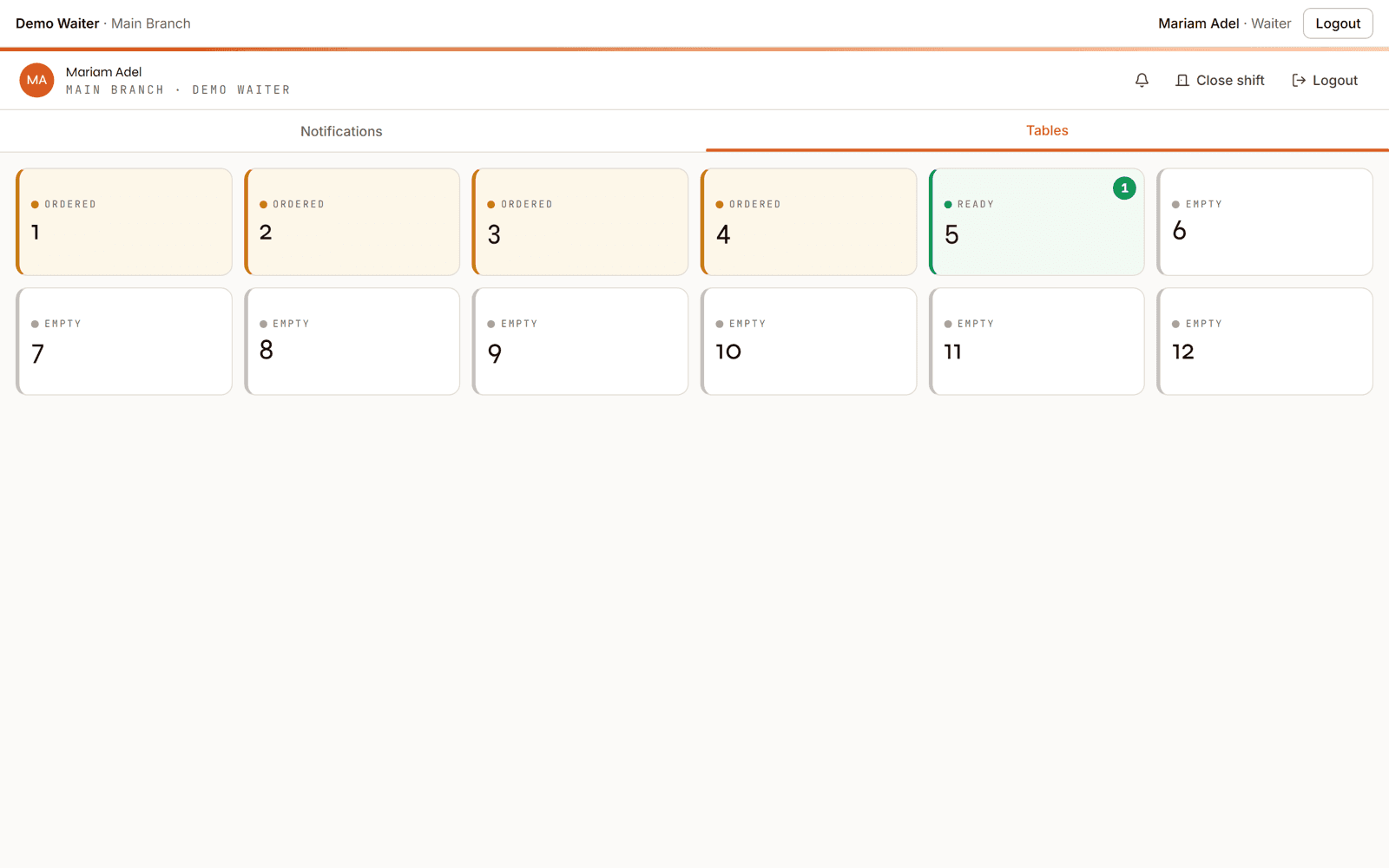
The waiter surface is not a second system. It opens an order against a table, adds items to it, and fires them to the kitchen — the same order the cashier will close and the same one the kitchen already sees. What changes is who is holding the device and what they are allowed to do with it.
From table to kitchen
The walk from the table to the till is where orders get lost, modifiers get dropped and the kitchen starts late. Removing the walk removes the failure.
Items are added to an order opened against a table, so a party's food stays together through service, splitting and the final cheque.
Sending items opens a ticket at the station that cooks them. The kitchen starts while the waiter is still at the table, not after the walk back.
Waiters sign in to a shared device with a PIN, so the order records who took it without a personal device or a password on the floor.
What the kitchen marks ready surfaces for the floor, so runners take plates because they can see them, not because someone shouted.
The table, the waiter and the kitchen are all looking at one order.
One order, two surfaces
The order a waiter opens is the order the kitchen receives and the cashier closes. Adding an item, firing a course and marking food ready are all steps on the same record, so the floor and the pass never hold different versions of a table.
Against the notepad
The pad works. It just costs a lap of the dining room per order, and the kitchen pays for the delay.
| Capability | Pad and till | Plato |
|---|---|---|
| Order entry | Written, then re-typed | Entered once, at the table |
| Kitchen start | After the walk back | As the items are fired |
| Modifiers | Remembered | Attached to the item |
| Who took it | Handwriting | The waiter's PIN on the order |
| Ready food | Shouting | Listed for the floor |
| Splitting | Rewritten at the end | The order already knows its table |
Fitted to the floor you run
Courses fired when the table is ready for them, with the order held against the table from the first drink to the cheque.
Shared devices and PIN sign-in mean any waiter can pick up any handset without a personal login slowing the turn.
Take the order at the table and let the counter close it, without the guest queuing twice.
Getting the floor on it
The waiter app runs on the devices you already have and against the menu the branch already sells.
Define the tables the branch actually has so orders have somewhere to belong.
Each waiter gets a PIN for the shared devices, and their role decides what they can do.
Open an order at the table, add items, and fire them to the kitchen from the floor.
Watch what the kitchen marks ready and run it while it is hot.
Waiter app questions
No. Devices are shared and waiters sign in with a PIN, so a handset can pass between staff while each order still records who took it.
Yes. Firing items from the floor opens a ticket at the station that cooks them, so preparation starts without the walk back to the till.
No. The waiter surface opens the same order the cashier closes and the kitchen prepares. There is one order record, viewed from different places.
Yes. Access comes from the role assigned to that person for that branch, so actions like voiding can sit with a manager rather than the whole floor.
Items the kitchen marks ready appear as a list for the floor, so runners can act on what is waiting at the pass rather than relying on a shout.
Yes. The order is opened against the table, so items stay together for service and for the cheque at the end.
See it on your own floor
Book a walkthrough with your floor plan, your service style and the table that always takes too long.
Send us a few details. We'll set up a live walkthrough on your real menu, in your language, within one business day.